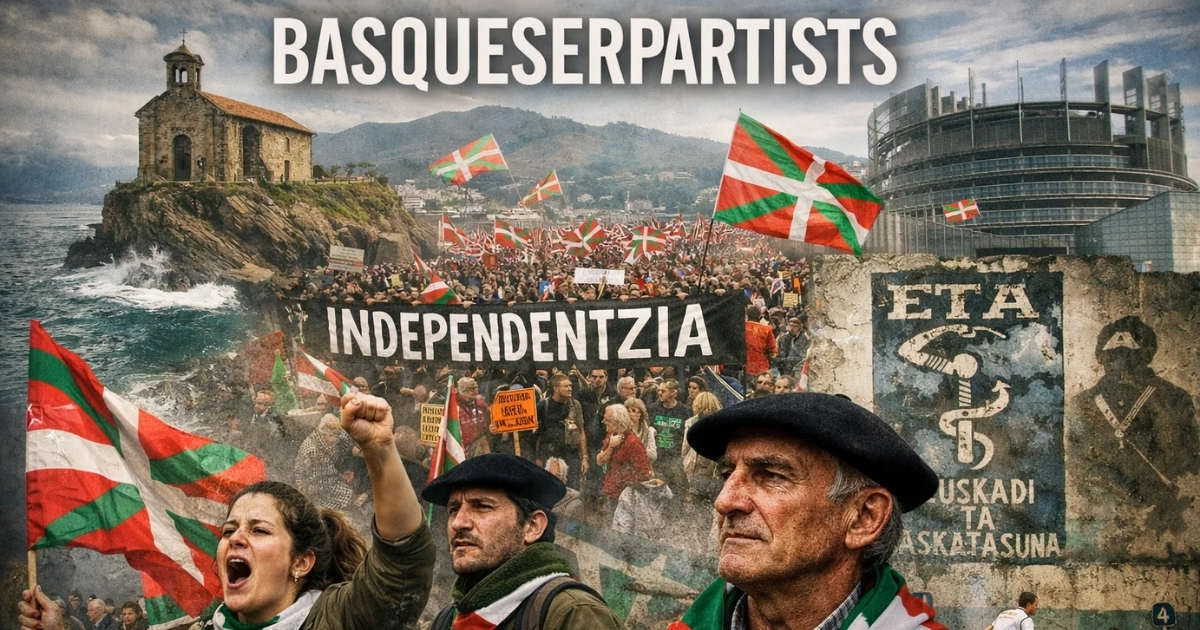
Art is never static, and there are not many movements able to incorporate old mythology in such a creative and smooth way as this unique Basque manifestation. Basqueserpartists have become one of the most interesting works of art with its roots in the rich cultural tradition of Basque people and the symbolism of serpents, which captures the attention of many people worldwide.
In order to have a proper idea of what Basqueserpartists is, it is important to delve into the mythological base of it, its cultural meaning, and its increasing power in the world of modern art.
What Are Basqueserpartists?
Basqueserpartists are artists who are affiliated with the Basque region who use serpent symbolism in their arts. The name is a combination of three concepts, Basque (natives of the western Pyrenees), serpent (a potent mythological representation) and performers.
These artists practice a variety of fields, such as painting, sculpture, music, dance, performance and digital media. They are influenced by the ancient Basque myths where serpent-like creatures were associated with wisdom, fertility, and protection and were in contact with nature.
Read more awt88k meaning.
Why People Search Basqueserpartists
-
Increasing attention to cultural conservation with the help of art.
-
Interest in modern movements based on mythology.
-
Wish to know about regional identities.
-
The interest in serpent symbolism in other cultures.
Historical Roots of Basqueserpartists
Basque Cultural Background
Basques have one of the most unique cultural identities in Europe. Their language Euskora is pre-indoeuropean and has a language of its own. This exception has strengthened a great perception of cultural continuity over centuries.
Basques Country- Basques Country is located in northern Spain and south western France. Basques have maintained their traditions amid political and cultural pressures. In the 20th century, Basque language and cultural expression came into active suppression particularly under the Franco regime of Spain. Art was in turn turned into a weapon of defiance.
Mythology, Symbolism and Identity
Mythology in the Basque language is a key to the movement. Sugaar, a serpent god of storms, fire, and transformation, is one of the main characters, usually related to Mari, goddess of the earth. Their marriage is a representation of strong forces of nature and regeneration.
There is no denying that the Basque culture perceives the serpents as protectors of wisdom and harmony despite the fact that in most societies, the serpent is associated with danger or evil. Animals such as Herensuge, a multi-headed serpent were perceived to be protectors as opposed to being dangerous.
Early Artistic Roots
Its artistic roots can be traced several centuries ago, with the manifestation in stone carvings, tools, and medieval architecture. This is when Basque artists started mixing such ancient symbols with the contemporary art movements in the early 20th century.
It gained momentum in the late 20th century when cultural revival saw artists rediscover and reinterpret their heritage in new forms.
Association with Form and Tradition
This movement continues to focus on Euskara. The use of Basque words, phrases, oral poetry and symbolic typography is embraced by many artists and they make the work authentic to culture.
Themes and images are often impacted by traditional festivals, country sports, music, dances such as aurresku, and food traditions.
Art as Storytelling
Basqueserpartists are akin to modern day storytellers who render old tales in the present day. The serpent symbolizes:
-
Change- individual and cultural development.
-
Wisdom- the knowledge which is inherited by the ancestors.
-
Balance- balance between man and nature.
-
Strength- endurance by adjustment.
Basqueserpartists vs Political Movement
Clearing the Confusion
- Basqueserpartists is hadled with Basque separatism which are not similar whatsoever.
- Basqueserpartists are interested in culture and arts.
- Basque separatists are political activists who demand autonomy or independence.
The wordings are very similar and this leads to confusion but the acts and intents are different.
Cultural, Not Political
Although single artists might have their own political views, the movement is more of identity, mythology, creativity and continuation of cultures than activism. It is inspired by postmodern ideas and digital exploration, and was developed largely after the 1990s, as well as by philosophical concepts of fluid identity instead of nationalism.
Basqueserpartists as Interpreted Modernly
Nowadays Art and Digital Media
Today, the practitioners combine technology with tradition. Examples include:
-
Digital collages with use of historical graphics along with modern graphics.
-
Glitch art as a symbol of the fragmented identity.
-
Mythological figures in 3D printing.
-
Architecture can be converted into storytelling projected canvases.
Installation Art
Installations usually combine natural materials such as stone, wool and wood in addition to LEDs, sensors, and projections. This opposition is the image of the equilibrium between the traditional and technological development. In woven art some artists place QR codes, which connects the audience to poetry or music or oral Euskora stories.
Global Influence
Basque contemporary art has become well known internationally, and museums and galleries in Europe display serpent inspired works. Since its opening, the Guggenheim Museum Bilbao has been influential in increasing the global interest.
Key Themes and Symbols
Mythological Figures
-
Sugaar – change and tempests.
-
Mari – earth and balance
-
Herensuge – guardian serpent
-
Basajaun – spirit of the forest and its protector.
Visual Characteristics
-
Stratified fractured compositions.
-
Organic-mechanical hybrids
-
Fading scripts and experimental typography.
-
Serpentine non-linear forms.
Philosophical Foundations
-
Fluid identity outside definite categories.
-
Group and decentralized design.
-
Living historical memory
-
Resistance to culture using beauty.
Why Basqueserpartists Is Going Viral
Rising Search Interest
-
Growth in cultural tourism
-
Good appearance on social platforms.
-
Indigenous art academic research.
-
Online galleries increasing reach worldwide.
Cultural Relevance
With the world turning global, and people becoming appreciative of movements that maintain distinctiveness but at the same time being global, movements that defy globalization tend to gain more value.
The symbol of universal renewal and wisdom which the serpent symbolizes is very relatable by cross-cultural standards and thus the movement is very relatable.
Common Misconceptions
-
Myth: It is pure folk art.
Reality: It is a hybrid of classic and the state-of-the-art digital effects. -
Myth: Each work contains snakes.
Reality: Symbolism can be abstract or conceptual. -
Myth: It is Basque separatism.
Factuality: It is cultural but not political. -
Myth: It can only be Basques.
Fact: Decent international cooperation is embraced.
Frequently Asked Questions
What is Basqueserpartists?
It can be defined as artists who were inspired by Basque culture and employed serpent symbolism within the mythology of the region.
Is the movement real?
Yes. It is modern, developing, and based on the real traditions.
Is it political?
No. It does not concentrate on independence movements but on the expression of culture.
Where can I see this art?
Basque festivals, Spanish and French galleries, online exhibitions and foreign museums.
Why is it trending now?
There is growing interest in cultural preservation, visual storytelling and art that is based on mythology.
What makes it unique?
The combination of ancient mythology of serpents, Euskara, and modern artistic methods.
Concluding Remarks: Basqueserpartists as a Cultural Ideal
Basqueserpartists is a living heritage as opposed to fixed tradition. The movement makes Basque culture dynamic and up to date by transforming ancient myths into modern forms…
Also read more information.