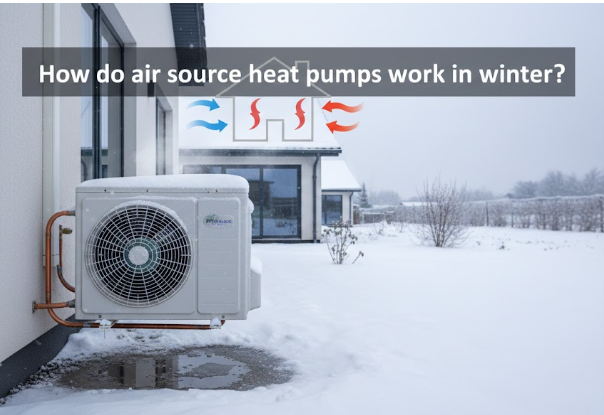
Air source heat pumps warm houses using heat extracted from the air. They perform really well even in the cold. Many individuals question how they acquire heat in frigid weather, especially when considering the financial incentives provided by the Boiler Upgrade Scheme to help homeowners transition to greener tech.
The answer is really straightforward. Even in frigid conditions, the air always carries some heat. Special technology used in heat pumps gathers and boosts this heat source. This keeps houses warm even in rather frigid outside conditions.
How Heat Pumps Take Heat from Cold Air
Within heat pumps are a liquid known as refrigerant. This liquid absorbs outside air heat. Taking up heat, the refrigerant transforms into gas. To make the gas hotter, the heat pump then squeezes it. This hot gas moves through a coil inside the house. A fan blows air over the coil to warm up rooms. The gas then cools down and becomes liquid again. This cycle repeats to keep the house warm.
What Happens When It Is Freezing Outside?
Even in freezing temperatures, air contains heat energy. The heat pump works harder when it is very cold. It runs for longer periods to get enough heat. Some heat pumps have a backup system to help.
This backup system uses electric heating when needed. Modern heat pumps are made to work in freezing weather. They can still provide warmth even in temperatures below zero degrees Celsius.
Defrosting the Heat Pump in Winter
Winter brings frost sometimes on the exterior unit of the heat pump. This may prevent it from operating as it ought. The heat pump runs a defrost mode to correct this. This mode melts the ice so the pump can work again.
The defrost cycle happens automatically when needed. It only lasts for a few minutes. After that, the heat pump goes back to heating the home. Proper maintenance helps keep the pump working well all winter.
How Efficient Are Heat Pumps in Winter?
Heat pumps are still very efficient, even in winter. They use less energy than gas boilers. For every unit of electricity used, they produce more heat. This makes them a great choice for saving energy.
Their efficiency may go down in very cold weather. But they still work better than many other heating systems. Good insulation helps the heat pump work better. Homes with proper insulation keep heat inside for longer.
Why Are Heat Pumps Better Than Traditional Heating?
Heat pumps generate heat not by burning fuel. Burning fuel fuels gas and oil boilers, therefore generating pollutants. Cleaner for the environment and using energy, heat pumps are Over extended terms, they also run reduced expenses.
Though they run on electricity, they generate more heat than they consume. This makes them more energy-efficient. With government grants, they are also more affordable to install. Many UK homes are switching to heat pumps for these reasons.
How to Make a Heat Pump Work Better in Winter
Maintaining the heat pump allows it to operate better in winter. Filtering cleanliness guarantees effective airflow. Keeping the outdoor unit free of snow and ice helps too. Setting the thermostat to a steady temperature is also important. Turning it up and down too much makes the heat pump work harder. A steady temperature saves energy and keeps the house warm. Using good insulation also helps reduce heat loss.
Can a Heat Pump Replace a Boiler in Winter?
Yes, a heat pump can replace a boiler. But it works differently than a gas boiler. A boiler quickly makes high-temperature heat. A heat pump provides lower, steady warmth. Houses with heat pumps might need larger radiators.
Heat pumps also perform well with underfloor heating. Heat pumps maintain houses’ warmth just like boilers when set up correctly. They are also more energy-efficient and environmentally friendly.
Common Problems with Heat Pumps in Winter
Heat pumps work well, but they can have some issues in winter. Frost on the outdoor unit can reduce efficiency. A blocked air filter can also stop it from working well. Low refrigerant levels can make heating weaker.
Regular servicing helps prevent these problems. Important are checking the unit for ice and cleaning the filters. An expert can assist to repair a stopped heat pump. Good maintenance helps most issues to be easily resolved.
Government Grants for Heat Pumps in the UK
The UK government funds enable low-income homeowners to install heat pumps. Using these funds helps one save money by switching from boilers or traditional heating systems. The ECO4 Scheme assists with installation cost cover. Installing a heat pump may cost homeowners up to £10,000. The air source heat pump grant covers 100% cost of the heat pump including installation.
This makes them more reasonably priced for many individuals. Changing to a heat pump cuts heating costs and saves energy. It also aids in environmental protection and lowering of carbon emissions.
Final Thoughts
Air source heat pumps work well in winter. They take heat from the air, even in freezing weather. They are energy-efficient and environmentally friendly. Good insulation and proper maintenance help them work better.
Government grants for air source heat pumps make them more affordable. Many UK homes are switching to heat pumps to save money and energy. With the right setup, heat pumps keep homes warm all winter long.