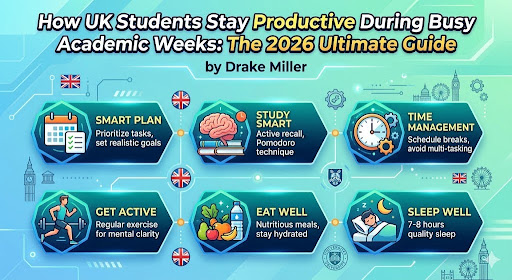
Between the pressure of A-Level mocks, the intensity of UCAS personal statements, and the relentless cycle of university seminars, academic life in the UK is a marathon. For many students—from Year 12s to final-year undergraduates—the feeling of being overwhelmed isn’t just common; it’s practically a rite of passage.
However, productivity in 2026 isn’t about “grinding” for 15 hours a day. It is about working smarter within the unique framework of the British education system. Whether you are tackling a complex dissertation or preparing for GCSEs, staying productive during peak weeks requires a blend of mental discipline, emerging digital tools, and physical well-being. This guide explores the proven strategies UK students use to stay ahead of the curve without burning out.
1. Mastering the Art of “Time Boxing” over To-Do Lists
Traditional to-do lists can often become “guilt lists”—long inventories of tasks that never seem to end. Successful UK students are increasingly turning to Time Boxing.
This creates a fixed container for work, preventing a single task from bleeding into your entire evening. This method is particularly effective for managing the “crunch weeks” common in UK universities. For those moments when the sheer volume of deadlines feels insurmountable, many turn to professional resources. Students facing specialized business modules often seek targeted marketing assignment help to navigate complex case studies and consumer behavior theories. Utilizing Myassignmenthelp can be a strategic way to manage overwhelming deadlines, allowing you to focus on revising for exams while experts assist with structural guidance, high-level research and secondary source gathering.
2. The Power of “Deep Work” in the UK Library System
UK universities and colleges offer some of the best study environments in the world. However, sitting in the library for six hours doesn’t guarantee productivity if four of those hours are spent scrolling through social media. To achieve “Deep Work”—a term coined by Cal Newport—students should leverage their environment:
- Locate the “Silent Zone”: Most UK libraries, such as the British Library in London, the John Rylands in Manchester, or the Bodleian in Oxford, have strict silent areas. The social pressure of seeing everyone else working intensely acts as a natural productivity booster.
- Phone Distancing: Leave your phone in your bag, or better yet, in a locker. Research shows that even having a phone on the desk reduces cognitive capacity.
- Monotasking: Focus on one module at a time. The “context switching” of jumping between Biology and English Literature every 20 minutes reduces your functional IQ by up to 10 points.
3. Navigating the “S-Curve” of the UK Academic Calendar
Productivity isn’t a flat line; it follows the specific rhythm of the British academic year. Understanding this “S-Curve” allows you to peak at the right time.
- The Michaelmas (Autumn) Term: This is for setting foundations. Productivity here is about organizing your digital workspace, mastering referencing styles (Harvard, OSCOLA, or APA), and building a rapport with tutors.
- The Hilary (Spring) Term: This is often the most grueling period. The “January Blues” coincide with heavy mid-term assessments and rising stress levels. When the workload becomes overwhelming, some students look for external support or choose to pay someone to do assignment tasks to manage their deadlines effectively.
- The Trinity (Summer) Term: The exam crunch. Productivity here shifts away from reading and toward active recall and past papers.
4. Leveraging Agentic AI and Digital Literacy
By 2026, the most productive students aren’t just using AI to summarize text; they are using Agentic AI to act as a research coordinator. Tools like Gemini and Notion AI can help you structure your study schedule based on your specific exam dates and syllabus. However, the secret is using technology as a scaffold, not a crutch. Use AI to brainstorm “Personal Statement” themes or to create flashcards from lecture notes, ensuring you stay in the driver’s seat of your own learning.
5. The Pomodoro Technique with a “British Twist”
The Pomodoro Technique (25 minutes of work, 5 minutes of break) is a staple for a reason. However, for UK students, the secret lies in the quality of the break. Instead of checking your phone—which keeps your brain in a state of high-beta wave activity—use those 5 minutes to make a proper cup of tea or step outside for fresh air. This physical reset helps clear the brain’s “attentional blink,” making the next 25-minute stint significantly more effective.
6. Smart Note-Taking: Beyond the Lecture Slide
In UK Higher Education, lecturers often provide PowerPoints online before the session. A common productivity trap is simply transcribing what is already on the slide. To stay productive, use the Cornell Method:
- Cues: Key dates, names, or concepts.
- Notes: The core information.
- Summary: A 2-sentence wrap-up at the bottom of the page.
This forces you to process the information in real-time. When it comes to revision week in May, your “Summary” sections will save you dozens of hours of re-reading.
7. Healthy Body, Productive Mind
You cannot run a high-performance engine on cheap instant noodles and energy drinks alone. The “Student Diet” is a cliché, but the most productive students in London, Manchester, and Edinburgh know that nutrition impacts cognitive function.
- Hydration: The brain is roughly 75% water. Even mild dehydration can lead to brain fog and irritability.
- Sleep Hygiene: Pulling “all-nighters” is scientifically proven to be counterproductive. Sleep is when your brain moves information from short-term memory to long-term storage. Without it, your 3:00 AM study session is essentially wasted.
8. Maintaining Academic Integrity in the AI Era
In the UK, academic integrity is paramount. Much of a student’s stress comes from the fear of unintentional plagiarism or failing to meet the rigorous formatting standards required by Turnitin. Being productive means leaving enough time for a final, thorough review. If you find yourself struggling with the technicalities of academic writing or citation, seeking support from services like MyAssignmentHelp can provide the necessary editing and proofreading to ensure your work meets the high standards of UK institutions while remaining your own original thought.
9. The Social Aspect: “Teach to Learn” Groups
Productivity doesn’t have to be a solo endeavor. Forming a study group with coursemates can help clarify complex topics. However, the “Productivity Rule” for groups is: Teach to Learn. If you can explain a concept (like Keynesian economics or Osmosis) to a peer, you have mastered it. This is far more productive than reading a textbook silently in your room.
Frequently Asked Questions
Q.1 How do I manage A-Level revision with UCAS applications?
The key is “Micro-Tasking.” Treat your UCAS application as a separate module. Spend 30 minutes on it every Sunday rather than trying to write the whole thing in one weekend during mock exams.
Q.2 What are the best free study spaces in the UK?
Most local council libraries are excellent, but also consider museum cafes (like the V&A in London) or “study-friendly” cafes that offer student discounts and reliable Wi-Fi.
Q.3 How can I stop procrastinating on my dissertation?
Use the “Five-Minute Rule”: commit to working on your dissertation for just five minutes. Usually, the resistance disappears once you’ve started. If you are stuck on the outline, professional academic resources can help bridge the gap.
Q.4 How many hours should a UK student study per week?
For university students, the general rule is 35–40 hours (including lectures). For A-Level students, aim for 4–5 hours of independent study per subject, per week.
Summary of 2026 UK Productivity Tips
| Strategy | Target Audience | Core Benefit |
| Time Boxing | All Students | Eliminates decision fatigue and sets clear boundaries. |
| Silent Zones | University Students | Utilizes social proof to maintain deep focus. |
| Cornell Notes | High School & Uni | Actively processes information during live lectures. |
| Active Recall | GCSE / A-Level | The most efficient way to prepare for timed exams. |
| Professional Review | Final Year / Grad | Ensuring citations meet UK standards via MyAssignmentHelp. |
Final Thoughts for the Busy Student
As you head into your next busy period—whether it’s the run-up to Christmas break or the final exam season—take a breath. Organize your space, plan your blocks of time, and don’t be afraid to lean on your support network. Productivity is a skill, and like any other, it gets better with practice. Remember, the goal isn’t just to survive the week—it’s to excel within it.
About the Author
Drake Miller is a senior academic strategy consultant and content manager with over 12 years of experience in the higher education and digital content sectors. Based in the USA, Drake specializes in student productivity frameworks and the integration of AI in modern pedagogy.