Introduction to Cesta Roman
The word “cesta Roman” is a reference to the famous Roman roads as one of the most impressive engineering achievements of ancient times. They were more than simply roads, they were the foundation for the Roman Empire. They linked cities provinces, armies, and various cultures all across Europe, Asia, and Africa. If not for this, Rome could never have been able to become a mighty civilization.
It is believed that the Roman roads were constructed with amazing accuracy and tenacity. A lot of them remain in the present, showing how sophisticated Roman engineering really was. When we speak of the cesta roman, it is discussing a structure that was the basis for the world of warfare, trade, communications and even the modern infrastructure.
What Does Cesta Roman Mean?
The term “cesta Roman” is used frequently to refer to Roman roads in terms of a simple description. In Latin these roads were known as the viae Romanae. They were meticulously constructed roads built to last, and were designed for speed and durability. They were constructed to accommodate marched forces, trading caravans and messengers who conveyed important information across the empire.
Origins of Cesta Roman Roads
Early Roman Military Needs
The first roads in the roman world were constructed for one principal goal: military movement. Rome required fast and reliable routes for sending soldiers to battle. Before the advent of roads traveling was slow and risky. The Roman army required control and speed and roads solved this problem.
Expansion During the Roman Republic
As Rome was expanding it’s road system. The empire had to connect new conquered areas to the capital. Roads were a sign to show Roman power. One of the first major roads, known as the Appian Way, was constructed around 312 BCE and later came to be known by the name of “queen of long roads.”
Famous Cesta Roman Roads
The Appian Way is among the most well-known cesta roman roads. It was a route that connected Rome in southern Italy and eventually reached Brundisium, the city with the most port. Brundisium. It was initially designed for military purposes, but then it was transformed into a major trading route.
Via Egnatia
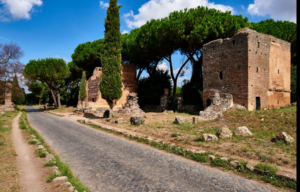
6The Via Egnatia connected the Adriatic Sea to Byzantium. It was among the most important routes east-west during the Roman Empire that crossed the the modern-day Balkans as well as Greece.
Via Au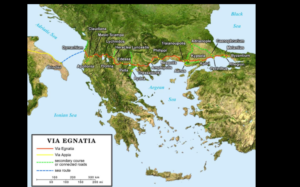 gusta
gusta
The Via Augusta was the longest road in Roman Spain, stretching over 1,500 km, and connecting all of the Iberian Peninsula.
Via Domitia
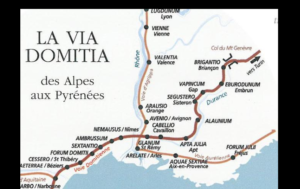
The Via Domitia was the first Roman road to be constructed in Gaul (modern France). It assisted in giving Rome to control and trade with the new territories within the region.
How Romans Built Cesta Roman Roads
Surveying the Land
Roman engineers initially studied the landscape with great care. They utilized tools like the Groma to ensure a straight alignment. The roads were constructed to be as straight as was possible even when it required cutting through mountains or going over rivers.
Layered Road Construction Method
The construction of the cesta roman roads was very technologically advanced. It had multiple layers of construction:
- The foundation of large stones
- A middle layer of gravel
- The upper layer of the tightly fitted pavement stones
The layered structure made roads extremely robust.
Drainage Systems and Engineering Genius
Romans constructed drainage ditches along one side of the highway. This helped prevent water damage and ensured roads were usable regardless of the weather. The slight curvature of the road’s surface made to let water drain away naturally.
Structure and Materials of Cesta Roman
Gravel and Stone Layers
The power of the cesta roman roads stemmed from their base. Massive stones were the foundation and were then smaller layers of gravel which gave them stability and flexibility.
Paving Stones and Surface Design
The top layer was constructed of precisely shaped stones. The stones were cut and placed in such a way that they are tightly held together, forming a the longest-lasting surface.
Role of Cesta Roman in Trade and Economy
Movement of Goods Across Empire
Cesta roman roads made trading quicker and more secure. Things like wine, olive oil grains, metals, and olive oil could be easily moved through the entire empire. Cities were more interconnected, and markets grew. This network of economics boosted Rome’s influence and wealth.
Military Importance of Cesta Roman
Fast Movement of Roman Legions
Roman armies relied heavily on roads. Soldiers were able to move swiftly to defend their borders or engage opponents. Supply wagons traveled along these routes with food, weapons and other gear.
Cultural Impact of Cesta Roman
Exchange of Ideas and People
Cesta roman roads weren’t solely for transportation, they connected people from different cultures. Different regions of people met in exchange of ideas, shared experiences, and also shared their traditions. This resulted in a more cohesive Roman world.
Engineering Innovations in Cesta Roman
Bridges, Tunnels, and Milestones
Romans built bridges that crossed mountains and rivers, as well as tunnels that went through the mountains. They also put markers along roads to gauge distances and help travellers. This system was extremely sophisticated for the time.
Legacy of Cesta Roman in Modern Roads
Influence on Today’s Highway Systems
Many of the roads that are modern across Europe continue to follow the ancient Roman routes. Engineers continue to study Roman techniques to find inspiration. The strength and durability of roads from the Roman Empire influence modern road design.
Archaeological Importance of Cesta Roman

Discoveries and Excavations
Archaeologists continue to discover Roman road segments. These discoveries aid in understanding the ancient technology and everyday Roman daily life. Certain roads are still utilized as walking trails and tourist destinations.
Conclusion
The tale of cesta roman is a tale of power, innovation and vision. These ancient roads linked an empire that spanned three continents. They helped shape war, trade as well as culture and communications in ways that influence the world of today. Even now, as we travel along smooth roads we’re following the same path that was first proposed by Roman engineers a long time ago. Their work reminds us of how brilliant ideas, when constructed with discipline and shrewdness will last for a lifetime.
FAQs
1. How do you define cesta roman?
Cesta roman is a reference to the old Roman road network that was constructed throughout Europe, Asia, and Africa.
2. What was the reason for cesta roman roads being created?
They were constructed mainly to facilitate trade, military movements and communication throughout the empire.
3. Are Roman roads still visible today?
Yes, there are many sections that exist in countries such as Italy, Spain, and Greece.
4. Is there a most fabled Roman road?
The Appian Way (Via Appia) is one of the most well-known preserved and well-tread Roman roads.
5. What was the length of time that it took to build the Roman road network?
The Roman road network spanned many thousands of kilometers across the entire empire.